Sunday, October 17, 2010

The Tierra Preta Project part 5- enjoy

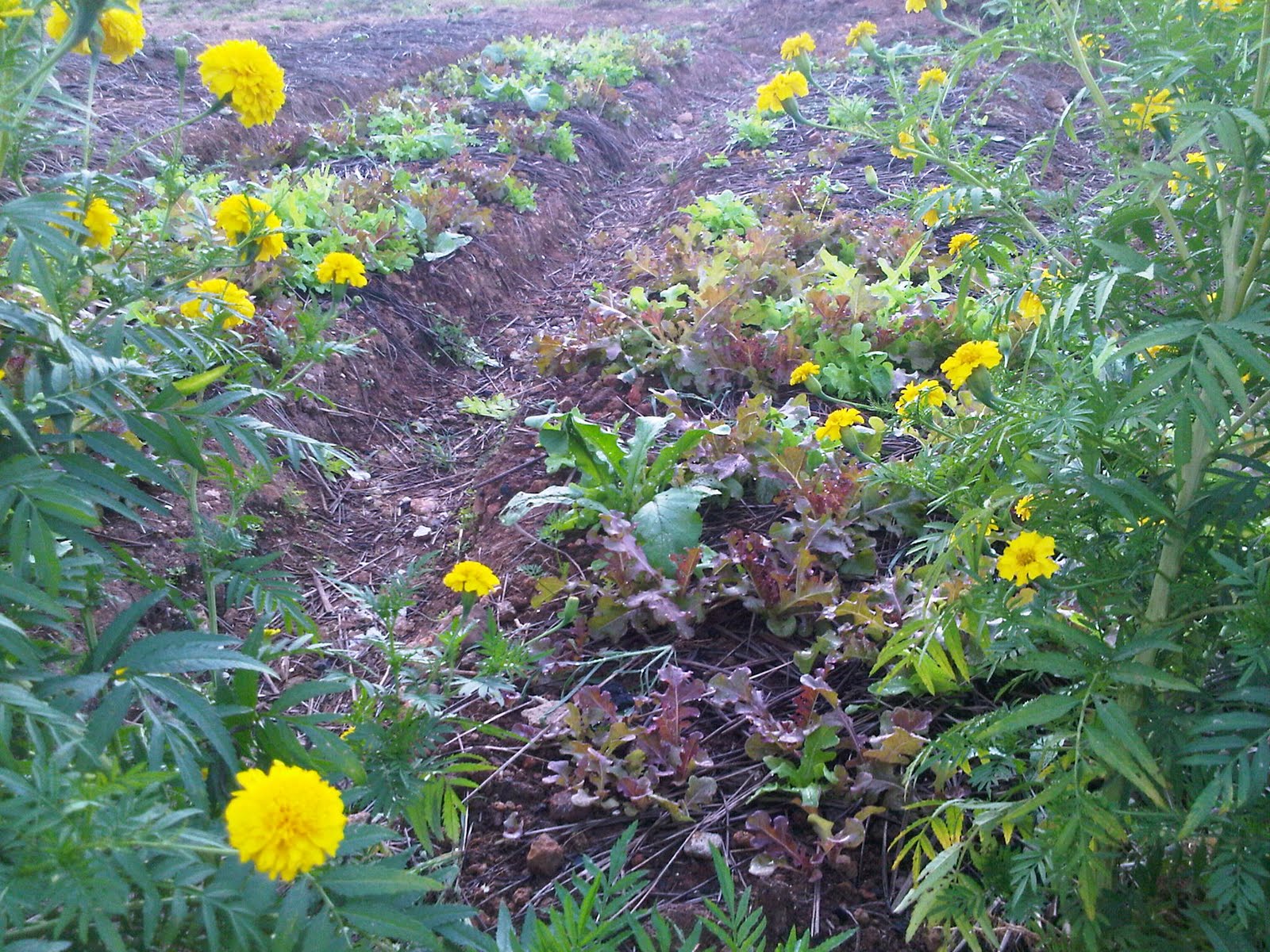
Here are some nice before and after pictures of our vegetable beds that we started a few months ago. They are now growing young lettuce.


Adventures with Bokashi

Recently I discovered that while I was waiting for my compost heaps to be ready, local organic farmers always had a surplus of organic fertilizer. So much so, that they even sold it in bags.

I then discovered that what they were making was bokashi. Honestly I felt quite embarrassed for never having heard of it before. But once I put my pride aside and began to research it I realized why this was such a common fertilizer technique.

Bokashi is a Japanese term that means, fermented organic matter. In essence it is similar to compost with some major differences that sets it apart.

Firstly bokashi is made with very fine starter material such as bran (rice or any other) coffee hulls (the by product after removing the bean), chicken and/or horse manure. This material is very fine, and thus decomposes or ferments quickly.

To this certain mineral additives may be added such as wood ash, bone meal and or rock phosphate, and/or ground limestone.

The most important ingredient however is good soil. Bokashi generally uses a large percentage of soil, typically 25% of the total mass. The best type of soil to use is dark forest soil. This acts as an inocculant of good microbes that aid in the fermentation product.

The ingredients are mixed thoroughly and moistened. The moisture content is very important. when the mixture is squeezed in the hand it should clump together lightly but not drip. If it soggy, heavy, or dripping it is too wet. If it doesn't clump at all it is too dry.

the mixture is kept dry but well aerated. So it must be under a roof or lightly cover with plastic. It can be kept on a bare floor or concrete for easy turning. The temperature of the bokashi will raise rapidly, and so it must be turned and aerated at least twice a day for the first week. Also the bokashi pile should not be higher that 50cm.

In the first week the bokashi heats up tremendously, this is ok as long as it doesn't get too hot. It should not get as hot as the compost pile. So 40 degrees Celsius max.

The life of the bokashi is such:

The first day it heats up tremendously
within the first week it stays hot and begins to smell of fermentation (a very distinct odour)
Next it begins to cool but maintains the odour.
Once the pile begins to cool, it is dried, until the odour disappears.

What you are left with is a rich, lush compost like material full of beneficial organisms ready to aid in the assimilation of nutrients from the soil for the plants.

Tuesday, September 21, 2010

Off I go to Malambo today! Looking forward to seeing how I can use my knowledge to help the orphanage create an integrated agricultural system to feed its children!

Tuesday, September 7, 2010

Our pasture rotation project with forage trees for sheep


Well we have just finished our pasture rotation project with forage trees. The project consists of turning an approximately 1ha land that was once bush, then damaged pasture land into a sustainable pasturing system that can withstand more than 50 sheep without additional feed for and indefinite period of time with little maintenance.

We subdivided an approx 1ha plot of land into 21 approx. 650m2 enclosed paddocks. I realize we spent a lot on good quality fencing, but realy and truly this fencing should last for many years with proper care.

The paddocks are arranged in two sections of strips which are parallel to each other. In between the sections is an access road which also serves as a paddock in itself.

The paddocks where planted with improved tropical pastures. We couldn´t afford to buy seeds, so we actually propagated cut grasses from neighbouring farms. With permission of course.

We lined the fences with live fencing of Balo (Glyricidia sepium). Balo is a legume, which not only aids in nitrogen fixation but is a very nutritious supplement to the diet of most pasturing animals.

Under the Balo we planted white mulberry (Morus alba) shoots, which are extremely easy to propagate and don't mind the shade once the Balo grows. The white mulberry is nutritious and fast growing which doesn't mind grazing.

Next outside of the fence, as a funcional ornamental we planted hibiscus shrubs (Hibiscus rosa-sinensis). We plan to feed the animals the cuttings. Sheep and goats are crazy about hibiscus!

Next inside the pastures we planted some Guachapalí trees (Samanea saman) . Guachapalí is a slow growing tree, but grows huge and gives a nice shade wich doesn't seem to discourage the growth of grasses. It maintains moisture in the earth and provides substantial biodiversity in its canopy. The leaves and fruits are edible.

We also planted lots of Moringa (Moringa oleifera) trees. These can be grazed or cut. We kept some for cutting and shade and some for grazing. The Moringa tree is truly miraculous! It is highly nutritious full of Calcium vitamin A and protein. It also acts as a soil improver since it is a legume and is extremely fast growing. The trees we planted about six months ago are already more than 8 feet tall! The great thing about Moringa is that all parts of the tree are edible, including the beans that it produces, and it remains green even in the worst part of the dry season! And best of all it is very tolerant of grazing. The only thing I have noticed, is that sheep need to get used to it. They touch it more in the dry season when they have little of other greens.

We are still expanding on our forage trees planted in the pastures. Soon we will be planting Leucaena which is not very easy to come by for some reason. Leucaena is another legume that can withstand foraging. We plan to plant it in rows among the grass.

Guacimo is another native tree that is nutrious and loved by sheep. We have it growing wild and is apparently also easy to propagate. We are planing to introduce it along the fence, perpendicular to the Balo.

All these forage plants can be accomodated in the paddocks easily with some imagination. We have already mentioned a great variety and yet there are still twice as much out there which grow either native in this area or can be found relatively easily. Variety is the spice of life they say, and in nutrition I do believe it is essential!

For the summer we have an irrigated protein bank next to the pastures of about 650m2in which we grow Guandú (pigeon pea), black eyed peas (cow pea), amaranth. Guarúmo and Acacia mangium we have all over the farm which is cut and given to the sheep.

Now if could irrigate the pastures, then we would be set, however, the purpose of these investigations is to make it accesible to most farmers, plus we don't have electricity nor city water.

The maintenance of the system is such that, whenever the sheep leave a paddock, we remove manualy all weeds, and reseed any bare patches if necesary. This work actualy becomes less and less with time, because the grass does not get damaged in the short period of time that the sheep are there and has ample time to recover. The weeds soon have little space to seed since the ground is densely planted with grass.

We also fertilize with Super 4 broth every two weeks during the rainy season. Super 4 broth is a liquid fertilizer whith an array of micronutrients, that we make at the farm. It is very easy to make. More on that at a later post.

Our system should work for 50 sheep or more (I will let you know how it goes when I get there). At the moment we have 20, and we rotate them about every 7 days, or when the grass has all been eaten. This gives us almost 5 months between grazing for each pasture. This is actualy too much, idealy we graze every 2 months in the rainy season and every 3 months in the dry season. This means that we can double the amount of sheep in the area so they rotate about every 3 days. For this reason we actualy sometimes have to hurry them along and cut the remaining grass.

So 50 sheep within 1 ha is quite a good amount as compared to the information I have seen on 10 sheep per acre in other posts. This would be the equivalent to 25 sheep per hectare.

This system essentialy should provide all the necesary nutrients for the sheep to thrive. It also allows farmers to have a high density of sheep without the need to feed them artificialy. The system also includes ample amout of trees which provide shade, retain moisture, produces microclimates, increases biodiversity, enhances soil stability, improves soil with leguminous trees, controls erosion and provides space efficient "vertical grazing". All in all the most eficient animal management system I have found to date.

Tuesday, August 3, 2010

soil analysis results

Well, our soil analysis came in. Although the micro nutrients where not done. They said the machine broke! You got to love Panama!
Although there was no big surprise in what the soil is lacking it was quite a surprise to see the difference between the amended soil and the virgin soil.

Here are the results:

Soil sample %sand/loam/clay pH P K Al OM%
Virgin 48-16-36 5.2 - 39 2.7 1.6
Amended 42-22-36 5.3 10 160 1 2.89

To no big surprise, we have little or no phosphorus in the soil, but are doing well with potassium. That is why our peppers and tomatoes suffer, while our bananas our growing spectacularly! Our organic matter has increased significantly and the aluminum has decrease significantly. Those are the most important!

So I have since begun to amend with bone-meal. Bone meal is quite inexpensive and easy to find. There is some limited availability of phosphorus rock in this country but it is quite expensive.

I am also working hard to bring the pH up a little by adding limestone and the charcoal which is mixed with ash also helps.

I have also since, realized that some plants like corn and tomatoes actually prefer raw manure than compost. So I have tried that with good results.

The new plots of land prepared for planting now get:
Lots of charcoal, limestone, bone meal and compost and/or raw manure. I never use raw manure on plants that are low to the ground like lettuce and other greens. And our manure is recovered from rotating pasture.

I will post pictures soon of our new veggie gardens.

Tuesday, June 1, 2010

The magic compost Mix


Compost is vital for nutrient depleted soil, however in the tropics, nutrients tend to leach out dramaticaly and the addition of any kind of fertilizer is highly inefficient.

Therefore charcoal aka pyrogenic carbon, biochar is vital in tropical soil systems.

Charcoal can be added directly to soil or into the compost heap itself. First we beat the charcoal to get it to small particles of no more than 1cm in diameter, then we mix about three sacks or more into into the compost pile. The compost pile also consist of vegetation, kitchen scraps and animal manure. We also add two layers of calcium and two layers of phosphorus rock dust. This mixture is mixed well with added water to get the optimal moisture for decomposition and placed in a one meter by one meter wide compost pile maintained by sticks (picture coming soon)and piled about 1.5 m high. The compost is checked for temperature and moisture periodicaly and and only mixed and re-moistened if deemed necessary.

Temperature is important and I like to make sure it gets very hot especialy when using manure (from our farm). By monitoring the temperature I can determine what stage the compost is in. I monitor it by inserting a machete into the heap and leaving it there for a while. Once I remove it I consider it hot (thermophile stage)when it is so hot that I have to remove my hand quickly, and I consider it warm (active stage) when the machete doesn't feel burning hot but comfortably warm to the touch.

Idealy when the heap cools down it is inocculated with beneficial bacteria (more on that later) and worms. Finding worms in my area has been a challenge so that is something I have been able to do yet.

Here I post a picture I took a few days ago when I sent my soil to be tested. I have two samples, one is virgin soil from our farm that has not been manipulated, and the other is treated soil (two years old), with carbon and organic fertilizer. It has only been fertilized twice in the last two years.

Tuesday, May 11, 2010

The Terra Preta Project, Step 3 and 4


STEP 3:
Once the piggies have done their magic, the earth is mixed with our magic tropical compost mix, and covered with mulch. If using regular compost or organic fetilizer, then charcoal must be added and inoculated with microbial broth. All of this will be discussed later.

STEP 4:
When the soil has rested / incubated a little bit, the next step is to plant green manure. My preference is beans. These beans are then cut just before flowering. The plant is left on the soil and eventualy incorporated.

This step can be repeated as many times as deemed necesary, and depending on the organic composition of the soil. If the soil lacks most topsoil or organic portion of soil this process may take a few years. In my experience if the compost is good, the soil reacts pretty quickly although it will take years before it will become ideal.